These are some of the hand drawn maps I did for the game. One of them is from early in the semester and the other four are from the final level design that we are building in Unity. You’ll notice that I’ve marked areas where the level ramps up, see hash marks for log and coin obstacles and collectibles, areas where there are caves and notes that mention areas where a specific animal should be used. Also, if you put the four maps together, one could draw what they think is an ideal path to get the fastest score possible. What was great about this process is that I could draw out maps, show them to the engineers for feedback and change them as needed. Sometimes when inserting the maps into Unity, the engineers found that sometimes the map wasn’t possible so we adjusted them as needed. This has been an extremely useful process. Very low tech, but invaluable for the engineering team to get the level into the game. 🙂
These maps are relevant and important – I developed them because we found building the level from scratch in Unity was NOT efficient. Instead, it was easier for the engineers to have me draw out the maps and we could discuss them afterwards for feedback. At times, parts of the level I had drawn would not work within the game’s engine, so the engineers would then modify it in game to fit as close as possible to the original vision. This iterative process was helpful in playtesting and also much more efficient than our previous attempts at level design.
Another valuable lesson from these hand drawn maps were that we could discuss what types of environments we could implement on these maps. Would they be valleys, grasslands, lakes, mountains, etc? We were able to create visual dynamics for the player as they journey through the level by this approach. I went through a lot of graph paper in creating these maps, and honestly, this was the best way to build the levels. The programmers and I could look at the maps together and plan out our approach in Unity rather than going into it haphazard. Since Unity has decent environment building tools, we will build the track into Unity and build the environment around it. We can also color the environment through Unity as well, so we can create snowy mountain areas and such. All very helpful as we push through this crunch time into the EAE Open House on December 7th.
-
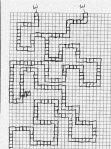
- A map from when we were thinking about level designs. Note that there are no forking paths.
-
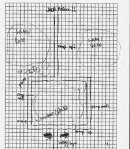
- Yet another portion of the EAE Day level
-

- A portion of the level for EAE Open House
-
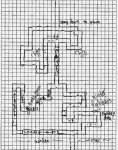
- Another part of the level for our EAE open house
-

- Modular hand drawn map for inputting into Unity
 Josh Lee